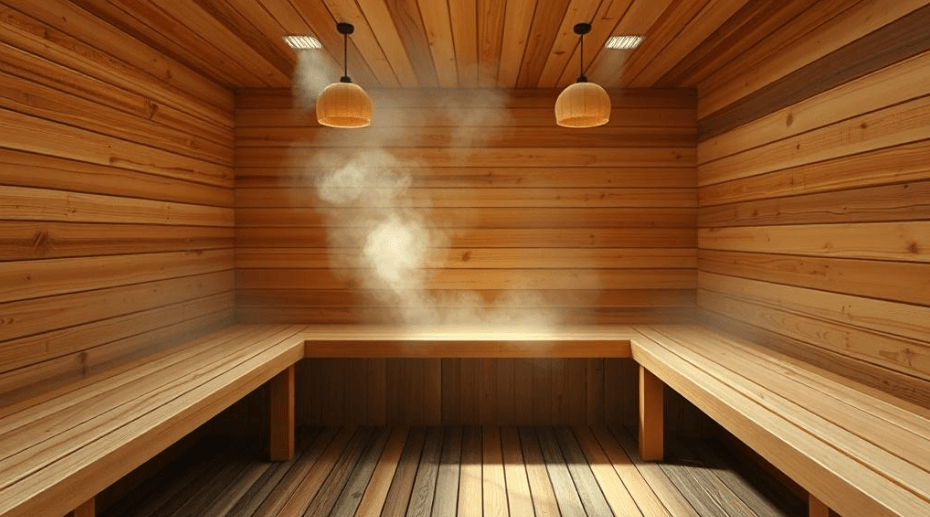
The right way to judge sweat Decks is by how it will feel, fit, and hold up after the first month. Heat performance, electrical planning, materials, maintenance, and actual user habits matter more than showroom language.
Cover image suggestion: A cedar barrel sauna set against a snow-dusted backyard at dusk, warm interior glow visible through the porthole window, no people, shot from a low angle to emphasize scale.
Meta description: Hot tub sales have plateaued while outdoor sauna shipments climb. Here is what is actually behind the shift, and why builders, dealers, and homeowners are quietly rerouting their wellness budgets.
Last October, a general contractor named Dave Kerrigan walked me through a new build in Stowe, Vermont. Three-bedroom, 2,400 square feet, nice but not extravagant. The clients had originally spec’d a six-person hot tub on the back deck. Somewhere around the framing stage they changed their minds. “They called me on a Tuesday and said scratch the tub, we want a sauna,” Kerrigan told me. “I’d had that same conversation four times already that year. By December it was seven.” He pulled the numbers for me: in 2023, his firm filed more sauna-related permits than hot tub permits for the first time in 22 years of business. The gap widened in 2024.
Kerrigan is not an outlier. Walk through any new high-end home build in Park City, Bend, Asheville, or the upper Hudson Valley and you will see the same thing. The reinforced hot tub pad is gone. In its place sits a small structure clad in thermally treated wood, vented, wired for 240 volts, tucked near the back fence with a clear line of sight to whatever view the lot offers.
This is not a fad. It is a category shift, and it has been building since roughly 2019.
Hot Tubs Hit a Ceiling
For three decades, the hot tub was the default backyard wellness purchase. The Hot Tub Manufacturers Trade Association tracked steady unit growth through the early 2000s, peaking in the mid-2010s and softening every year since. Industry data from Pool & Spa Marketing put domestic acrylic hot tub shipments roughly flat from 2019 through 2024, even as backyard improvement spending rose overall. Something else absorbed that demand.
Sauna sales did. Distributors I have spoken with at the Hearth, Patio & Barbecue Association expo cite year-over-year growth in outdoor sauna kits in the 22 to 35 percent range, with cedar barrel and panel cabin formats leading.
A few forces are stacked behind that curve, and they compound each other.
Maintenance Fatigue Is Real, and It Compounds
Anyone who has owned a hot tub for more than three years has a chemistry story. Bromine versus chlorine. Total alkalinity drifting. Scale rings around the headrests. Filter cartridges every six weeks. The cost of ownership is not the sticker price. It is the Saturday morning you spend squinting at a water test kit while your coffee gets cold.
Outdoor saunas have almost no chemistry problem. There is no standing water. A traditional sauna heater needs the rocks rotated once a year and the elements replaced every five to fifteen years depending on use. The bench wood gets a light brush. That is essentially it.
Think of it like the difference between owning a saltwater aquarium and owning a fireplace. One demands constant tinkering; the other just needs a match.
The Recovery Culture Pivot
The same audience that bought hot tubs in 2010 now follows Andrew Huberman, Rhonda Patrick, and a long list of physiotherapists posting recovery protocols on Instagram. The cultural frame around heat has shifted. It is no longer a thing you sit in with a beer. It is a thing you sit in to extend your healthspan, lower blood pressure, and trigger heat shock protein expression.
Whether you find that framing earnest or marketing-driven, it has changed purchase intent. The buyer is not asking “will this be fun” anymore. They are asking “what does this do for me.” That is a fundamentally different sales conversation, and it favors the sauna.
The Energy Math Is Not Close
A 220 to 240V electric sauna heater pulls 6 to 9 kilowatts during heat-up and tapers once it hits set temperature. A typical session uses roughly 4 to 7 kWh end to end. A hot tub holding 104 degrees Fahrenheit twenty-four hours a day in a cold climate can run 200 to 500 kWh per month even with a good cover.
This started to matter in 2022 when residential electricity rates jumped across the West and Northeast. Several utility rate analysts I follow flagged hot tub standby load as one of the most visible single-appliance contributors to a household’s winter bill. A sauna, by contrast, only draws power when you use it.
There is also the footprint question. A hot tub demands a reinforced pad, often a separate breaker panel for jets and heaters, and a sightline buyers either love or merely tolerate. An outdoor sauna fits inside a 6-by-8 footprint at the small end and reads architecturally as a garden structure rather than an appliance. Landscape designers I have interviewed for trade press say they get fewer objections from spouses on sauna placement than on hot tub placement, which sounds trivial and is not. Spousal alignment is what gets the project funded.
What Buyers Are Actually Choosing
The current outdoor sauna market splits into roughly four formats.
Barrel saunas dominate the entry tier, generally $5,000 to $12,000 before electrical work. They heat fast because of the curved interior volume and look organic in a planted yard.
Cabin saunas are the mid tier, $12,000 to $30,000, often clad in thermo-treated aspen or western red cedar with a sloped roof and a small changing vestibule.
Pod or capsule designs are the architectural play, $25,000 to $75,000, usually a stainless steel or fiberglass shell wrapped in wood with a panoramic window. These show up in design magazines.
Custom indoor-outdoor builds with stone surrounds, full glazing, and integrated cold plunges crest into six figures and are typically built through firms that handle the whole envelope. Specialty outdoor sauna builders like Sweat Decks work in this tier, sourcing thermal aspen and Harvia or Huum heaters and coordinating with the homeowner’s general contractor on permits and electrical.
The barrel and cabin formats account for the bulk of unit volume. The custom tier accounts for most of the press coverage and most of the dollar volume per project.
Permitting Surprises That Blow the Budget
Here is the thing most first-time sauna buyers miss: electrical work, not the kit, is where costs sneak up.
Outdoor saunas almost always require a 240V dedicated circuit. That means a licensed electrician, a load calculation against the main panel, and sometimes a panel upgrade if the home is older than the mid-1990s. Homeowners underestimate this consistently. It is not a plug-and-play appliance, and the electrical work often exceeds the foundation cost.
Foundation requirements vary by jurisdiction too. Some towns accept a gravel pad with concrete piers for structures under a certain square footage. Others require a full poured slab with footing depth tied to frost line. In the Northeast, frost line can be 48 inches, which changes the project budget materially.
If you are pricing one of these, do not anchor on the heater and kit. Anchor on the full installed cost, which is usually 1.5 to 2.2 times the kit price after electrical, foundation, permit, and site prep.
The Finnish Data That Started All of This
A lot of the cultural momentum behind saunas traces back to research out of Finland. The Kuopio Ischemic Heart Disease Risk Factor Study, led by Dr. Jari Laukkanen and colleagues at the University of Eastern Finland, followed roughly 2,300 middle-aged Finnish men for over twenty years. Their 2015 JAMA Internal Medicine paper reported that men who used a traditional sauna four to seven times per week had substantially lower all-cause mortality and cardiovascular mortality compared to once-a-week users. Subsequent analyses extended findings to reduced incidence of dementia and respiratory disease.
The standard caveats: this was observational, not a randomized trial, and the cohort was Finnish men with a specific cultural sauna pattern. You should not read a single study as causal proof.
But the body of work has held up over a decade and has been followed by smaller controlled studies on blood pressure, vascular function, and heat shock protein expression. The signal is real even if the magnitude is still being argued. My honest take: for an audience that wants longevity infrastructure rather than entertainment infrastructure, that signal is more than enough to tip a purchase decision.
What This Means for Trade Professionals
The implication for builders, dealers, and designers is straightforward: sauna is no longer a niche category to refer out. The customer who used to ask for a hot tub now asks for a sauna, and often a sauna paired with a cold plunge tub. The combination (sometimes marketed as “contrast therapy” in retail copy) is now its own line item in residential build budgets.
The skills overlap with hot tub work in places, mainly the electrical and the site prep. They diverge sharply on materials. Cedar grading, thermo-treatment, stove venting, and bench geometry have nothing to do with acrylic shell installation. A builder coming into this category from spa work will need to either partner with a specialist or accept a learning curve on the first two or three projects.
For dealers, the margin profile is friendlier than acrylic hot tubs. Less inventory holding cost, less freight damage exposure, and a customer who is generally more research-driven and less price-obsessed than a hot tub buyer.
The Boring Truth About Who Still Buys Hot Tubs
This is not a clean substitution. A hot tub seats six people in 100-degree water with jets and a drink. An outdoor sauna seats four people in 170-degree dry heat. The use occasion differs. Families with young children still tend toward hot tubs. Adults building out a personal recovery routine tend toward saunas. The right answer for any given household depends on how they actually spend their evenings.
What is universal is the trend line. Backyard wellness spending is migrating, and the people who track this category for a living have noticed. Dave Kerrigan in Stowe certainly has.
Frequently Asked Questions
How much does a complete outdoor sauna installation cost? Expect $8,000 to $20,000 all-in for a barrel or small cabin model after electrical, foundation, permit, and site prep. The kit price alone is misleading; total installed cost typically runs 1.5 to 2.2 times the kit number.
Do outdoor saunas need a concrete foundation? It depends on your local code. Some jurisdictions accept a gravel pad with concrete piers for structures under a certain square footage. Others require a full poured slab with footing depth tied to frost line, which in the Northeast can mean 48 inches.
How much electricity does an outdoor sauna use compared to a hot tub? A typical sauna session uses 4 to 7 kWh. A hot tub maintaining 104°F around the clock in a cold climate can run 200 to 500 kWh per month. The sauna only draws power when you use it.
Is there real evidence that saunas improve health? The strongest data comes from the Kuopio Ischemic Heart Disease Risk Factor Study (Dr. Jari Laukkanen, University of Eastern Finland), published in JAMA Internal Medicine in 2015. Frequent sauna use (four to seven times per week) was associated with substantially lower all-cause and cardiovascular mortality over a 20-plus year follow-up. The study was observational, not a randomized trial, but subsequent smaller controlled studies have supported findings on blood pressure and vascular function.
Can I install an outdoor sauna myself? The sauna kit assembly is within reach for a competent DIYer. The electrical is not. A 240V dedicated circuit requires a licensed electrician and often a load calculation or panel upgrade. Skipping this step is a code violation and a fire risk.
What type of outdoor sauna is most popular? Barrel saunas dominate at the entry level ($5,000 to $12,000 before installation) because they heat efficiently and fit most yard aesthetics. Cabin saunas are the fastest-growing mid-tier segment.
Are hot tubs going away? No. Families, social entertainers, and buyers who want a communal warm-water experience still prefer hot tubs. But the solo or couple buyer focused on health and recovery is increasingly choosing a sauna, which is why the category share is shifting.